

What You’ll Build: A working integration that authenticates, invites a fleet, and retrieves live vehicle location data—all in under 10 minutes.
Integration Steps
Authenticate with the API
Exchange your Client ID and Secret for an access token to authorize your API requests.
Create a Fleet Invitation
Generate a secure invitation link to connect a fleet’s telematics provider to your organization.
Retrieve Fleet Data
Make API calls to access real-time vehicle locations and other telematics data from your connected fleet.
Prerequisites: You’ll need your Client ID and Client Secret from the Catena team. Don’t have credentials yet? Get access in minutes.
Step 1: Authenticate with the API
Before making any API requests, you need to obtain an access token using your Client ID and Secret. This token authorizes all subsequent requests to the Catena API.Request an Access Token
Replace<string> with your actual Client ID and Client Secret:
Request
Authentication Response
The response includes youraccess_token, which you’ll use in the Authorization header for all API requests:
Response
API Reference: Authentication
View complete authentication documentation including token refresh and scope management.
Step 2: Create a Fleet Invitation
Fleet invitations are the gateway for fleets to connect their telematics providers to your organization. Each invitation generates a unique, secure link that you can share with the fleet.Send an Invitation Request
Include afleet_ref to track this fleet using your internal identifier:
Request
Invitation Response
The response includes themagic_link that you’ll share with the fleet:
Response
Key Response Fields:
magic_link: The unique URL to send to the fleet for connecting their telematics providerexpires_in_hours: Invitations are valid for 24 hours by defaultfleet_ref: Your internal identifier for tracking this fleet in your systemstatus: Track invitation state (active,accepted,expired, ordeclined)success_redirect_url: The URL where fleets will be redirected after successfully completing the onboarding process
API Reference: Create Invitation
Explore advanced invitation options including TSP filtering, custom redirect URLs, and pre-registration tokens.
Step 3: Fleet Onboarding Experience
When a fleet clicks the invitation link, they enter the Catena Connect onboarding flow. This white-labeled experience can be customized to match your brand.The Connection Process
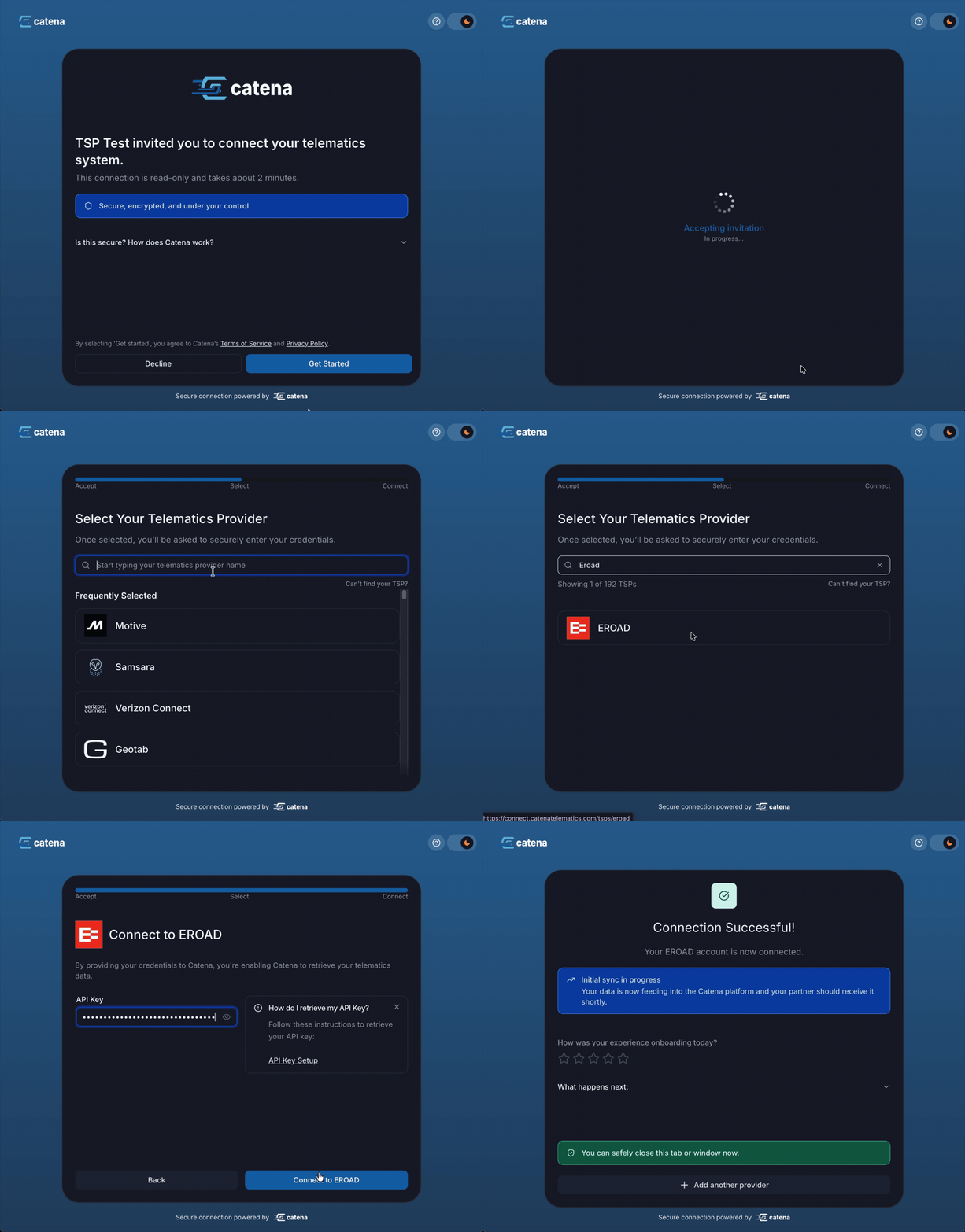
Fleet onboarding flow: Accept invitation → Select TSP → Authenticate → Connection active
- Review and Accept - The fleet reviews the data sharing agreement and accepts the invitation
- Select Provider - Choose their telematics service provider from our supported options
- Authenticate - Securely input their TSP credentials or API key
- Connection Active - Catena begins ingesting their telematics data in real-time
- Optional - Connect additional TSPs or return to your application via
success_redirect_url
Catena currently supports 368 ELD providers. See the list.
Data Available Immediately: Once the connection is active, telematics data begins flowing through the Catena API within minutes. You can start retrieving vehicle locations, driver information, and other data right away.
Step 4: Retrieve Fleet Data
Now that a fleet is connected, you can access their telematics data through the Catena API. Let’s start by retrieving real-time vehicle locations.Request Vehicle Locations
Use your access token to retrieve vehicle location data from all connected fleets:Request
Vehicle Locations Response
The response returns an array of vehicle location records with comprehensive telemetry data:Response
Understanding the Response:
fleet_id: Catena’s unique identifier for the fleetsource_name: The telematics provider (e.g., Samsara, Geotab, Motive)location.coordinates: GeoJSON format[longitude, latitude]occurred_at: ISO 8601 timestamp when the location was recorded- Pagination: Use
next_pageandprevious_pagetokens to navigate through results
Contact Support
Have questions or need assistance? Our team is here to help you succeed.